Why are my shingles curling and cracking
Curling and cracking shingles in Urbandale usually mean heat, hail, or age has caught up with your roof. Here is how to tell the causes apart and what to do about each.
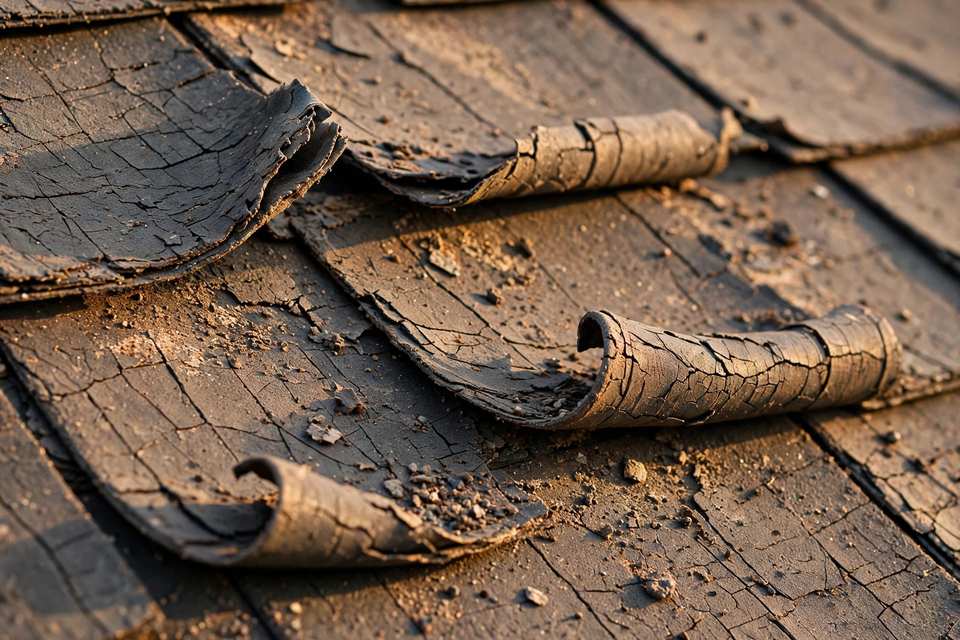
Shingles curling and cracking are two different failures: curling shingles turn up at the edges or cup in the middle, and cracking shingles split across the surface. Both mean the shingle is losing flexibility and no longer shedding water as designed — but they have different causes, and the response differs with the cause.
This guide explains the four main causes, how to tell curling from cracking and blistering, and when repair is enough. For the repair itself, see roof repair in Urbandale.
The short answer: heat, hail, and age
Heat, hail, and age cause most curling and cracking. Attic heat bakes shingles from below and dries them out. Hail bruises the mat and starts cracks. Age removes the flexibility that lets a shingle expand and contract without splitting. Poor installation accelerates all three.
The pattern tells you which cause dominates. Curling spread evenly across the roof points to heat and age. Cracking concentrated on storm-facing slopes points to hail. Curling on one slope only points to sun exposure or a ventilation problem on that side.
Why are my shingles curling and cracking in Urbandale IA?
Four causes, each with its own signature:
1. Heat and attic ventilation
A poorly vented attic traps heat against the underside of the deck. Shingles baked from below dry out, shrink, and curl at the edges. The effect is worst on slopes that also take direct sun, and it progresses faster in homes where insulation blocks the intake vents.
2. Hail impact
Hail bruises the mat and breaks the shingle's internal structure. A bruised shingle loses flexibility at the impact point and may curl or crack there as it ages. The only Urbandale-named hail record found in the research for this site is 1-inch hail on March 14, 2025; broader hail figures are metro-level only and labelled as such.
3. Sun exposure on the wrong slope
Slopes that take the most direct sun age faster than shaded slopes. Ultraviolet light and heat cycling dry the shingle's oils and stiffen the mat, and the stiffened shingle curls rather than flexing. (INFERRED from sun-exposure patterns — no slope-by-slope Urbandale study was found.)
4. Poor installation
Shingles set against the maker's instructions — wrong exposure, misaligned courses, poor nailing, or inadequate ventilation — curl and crack early. Installation problems often show within the first years, while age-related curling appears gradually across the whole roof.
What causes shingles to crack in Urbandale Iowa
Cracking has its own causes, overlapping with curling but not identical:
- Thermal splitting: repeated expansion and contraction opens cracks across the shingle.
- Hail fractures: impacts crack the mat, especially on older, stiffer shingles.
- Foot traffic: walking on cold or brittle shingles cracks them.
- Manufacturing variation: straight-line cracking patterns can indicate a product issue rather than weather.
- Age: the mat loses flexibility over time and splits instead of flexing.
Cracks admit water directly. A cracked shingle is a more urgent problem than a curled one, because the opening is already there — curling admits water when wind lifts the edge, while cracking admits it in ordinary rain.
How to tell curling from cracking from blistering
Curling, cracking, and blistering look similar from the ground but mean different things. Telling them apart starts with the attic: ventilation trouble shows in heat and moisture patterns that roof ventilation in Urbandale addresses.
- Curling: edges turn up (cupping) or the center rises (clawing). The shingle is intact but deformed.
- Cracking: visible splits across the shingle surface, sometimes with the mat showing.
- Blistering: round raised bubbles, sometimes popped, caused by trapped moisture or heat — not impact.
- Granule loss alone: bare patches without deformation, usually age or hail, needing an up-close check.
Photograph what you find from a ladder at the eave where safe, and note which slopes show which pattern. The pattern is the evidence an inspector uses to separate causes.
Can you repair curling shingles, or do you need a new roof?
Repair is enough when curling or cracking is limited to a few shingles, the surrounding courses are sound and flexible, and the cause has been addressed — a ventilation fix for heat curling, for example. Individual shingles can be replaced within their courses.
Replacement enters the conversation when curling or cracking is widespread, when the mat is exposed across whole slopes, or when the roof is already near the end of its service. Patching a widespread problem course by course costs more over time than addressing it once.
- Limited damage, sound surroundings, cause addressed: repair.
- Widespread damage across multiple slopes: replacement planning.
- Mat exposed in sheets: the covering has lost its protective layer.
- Soft or sagging decking beneath: a structural question, not a shingle question.
- Uncertain cause: an inspection before either decision.
When replacement is the direction, roof replacement in Urbandale sets out how scope is decided.
When the cause is uncertain, a roof inspection in Urbandale can separate heat, hail, sun, and installation causes from the pattern of damage.
How much service is left in curling shingles
No reliable figure answers that question for a specific roof. Curling shingles may shed water for some time yet, or may fail in the next wind-driven rain — the outcome depends on the extent of curling, the cause, and the weather the roof faces next. Any year count offered without an inspection would be invented, so none is given here.
What can be said is directional: curling that is spreading, cracking that is opening, and granule loss that is accelerating all point toward planning rather than waiting. Curling that is stable, limited, and monitored is a different situation.
The practical step is an inspection that records the extent and the cause, and a repair plan for the worst areas first. See roof repair in Urbandale for how repairs are scoped.
Common mistakes on Urbandale roofs
The most common mistake is sealing curled shingles down with adhesive and calling it fixed. The curl returns, the seal traps moisture, and the underlying cause — often ventilation — goes unaddressed. Another is ignoring the drainage system: overflowing gutters in Urbandale soak fascia and eaves and accelerate edge curling.
- Gluing or nailing curled shingles flat without addressing the cause.
- Pressure washing curled shingles, which strips granules and lifts edges further.
- Replacing individual shingles while the attic stays unvented.
- Assuming one curled shingle means the whole roof has failed.
- Assuming widespread curling can wait indefinitely.
- Walking on brittle, curled shingles and cracking them underfoot.
When to call a professional
Call a roofer when curling or cracking is spreading, when the mat is exposed, when water has entered the house, or when the cause is unclear. An inspection records the pattern and separates the causes.
Photograph the affected slopes before calling, and note when the change was first noticed. That history helps the inspector separate storm damage from age.
Rocc Solid Construction can be reached at (641) 219-5108. The business is open 24 hours, every day.
Frequently Asked Questions
Why are my shingles curling in Urbandale IA?
Heat from a poorly vented attic, hail impact, sun exposure, and installation that departs from the maker's instructions. The pattern across the roof shows which cause dominates.
What causes shingles to crack in Urbandale Iowa?
Thermal splitting from expansion and contraction, hail fractures, foot traffic on brittle shingles, and age-related loss of flexibility. Cracks admit water directly and deserve prompt attention.
Can curling shingles be repaired in Urbandale IA?
When damage is limited to a few shingles, the surrounding courses are sound and flexible, and the cause has been addressed. Widespread curling or cracking across multiple slopes points toward replacement planning.
Do I need a new roof if shingles are curling in Urbandale Iowa?
Not necessarily. Limited, stable curling with sound surrounding shingles may only need repair and monitoring. Widespread curling, exposed mat, or soft decking points toward replacement. An inspection separates the two.
How much service is left in curling shingles?
No reliable figure applies to a specific roof without an inspection. Spreading curling, opening cracks, and accelerating granule loss point toward planning; stable, limited curling is a different situation.
Get help with Roofing in Urbandale
If your shingles are curling or cracking and you are unsure what it means, call Rocc Solid Construction at (641) 219-5108 to arrange an inspection.