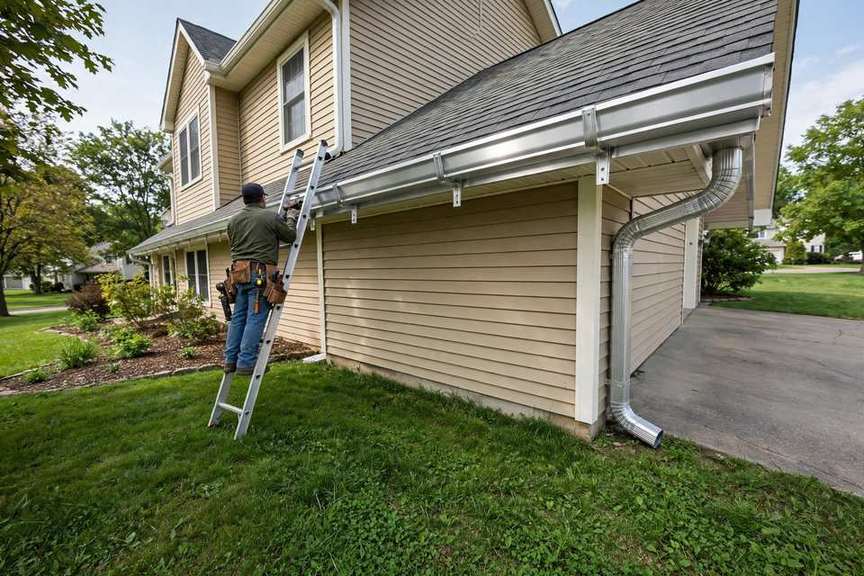
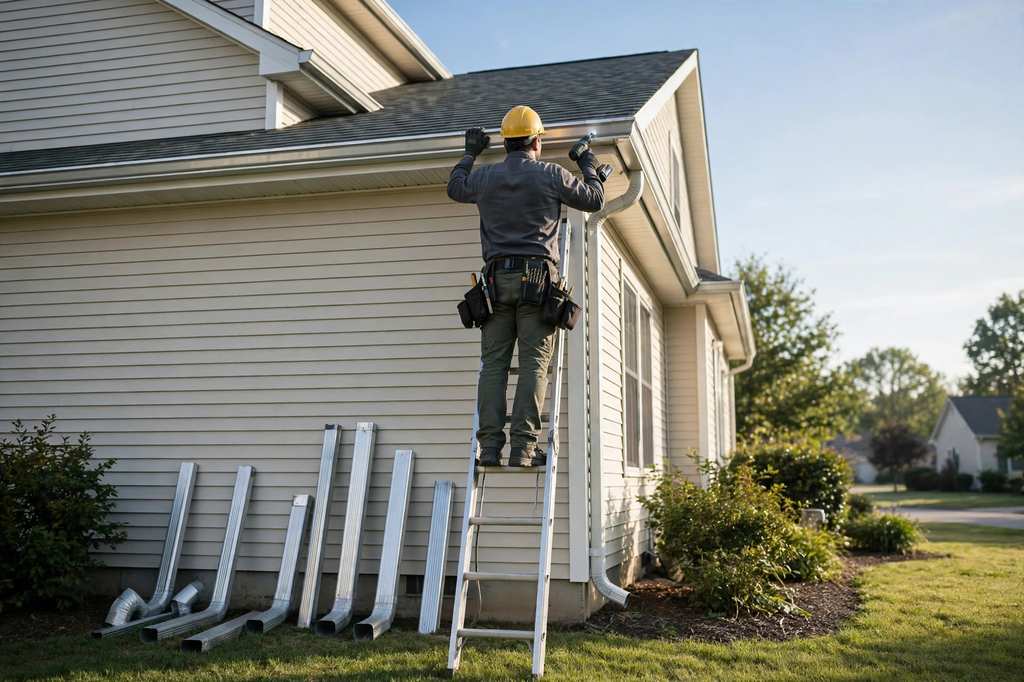
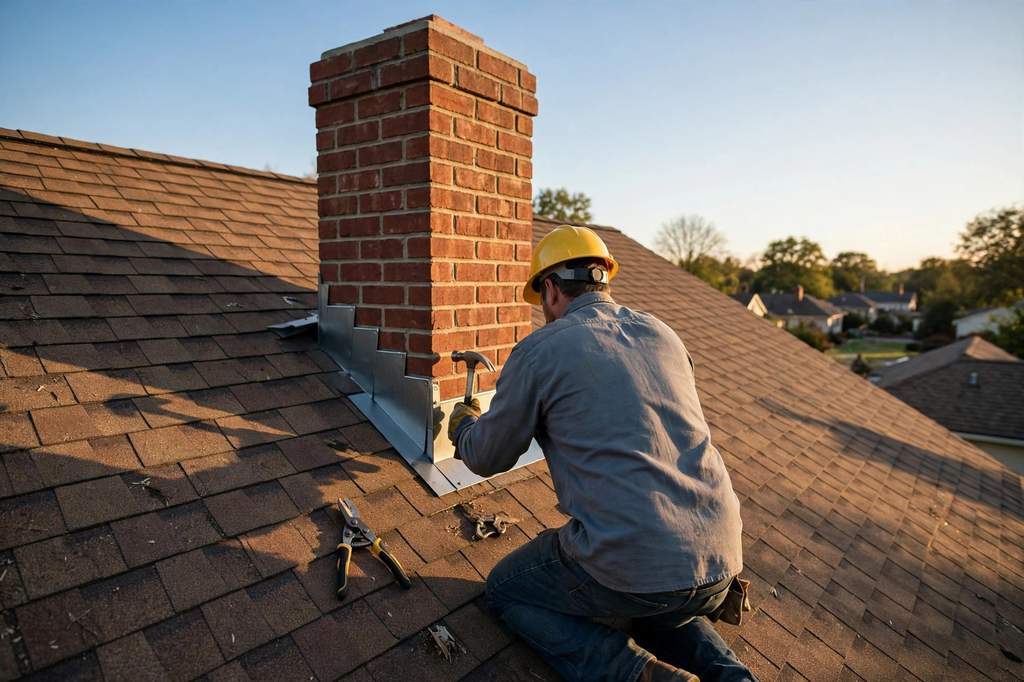
Gutter installation Urbandale homeowners need starts with a measure: seamless aluminum formed on site, every run set to pitch, and hangers fastened into solid fascia. This page also covers gutter repair, gutter guards, downspouts, and fascia work, since the gutter line fails as a system, not one part at a time.
A full replacement includes tear-off, fascia inspection, seamless forming, hangers, outlets, downspouts, and a water test. Guards, extra downspout extensions, and fascia board replacement are described separately in the written scope.
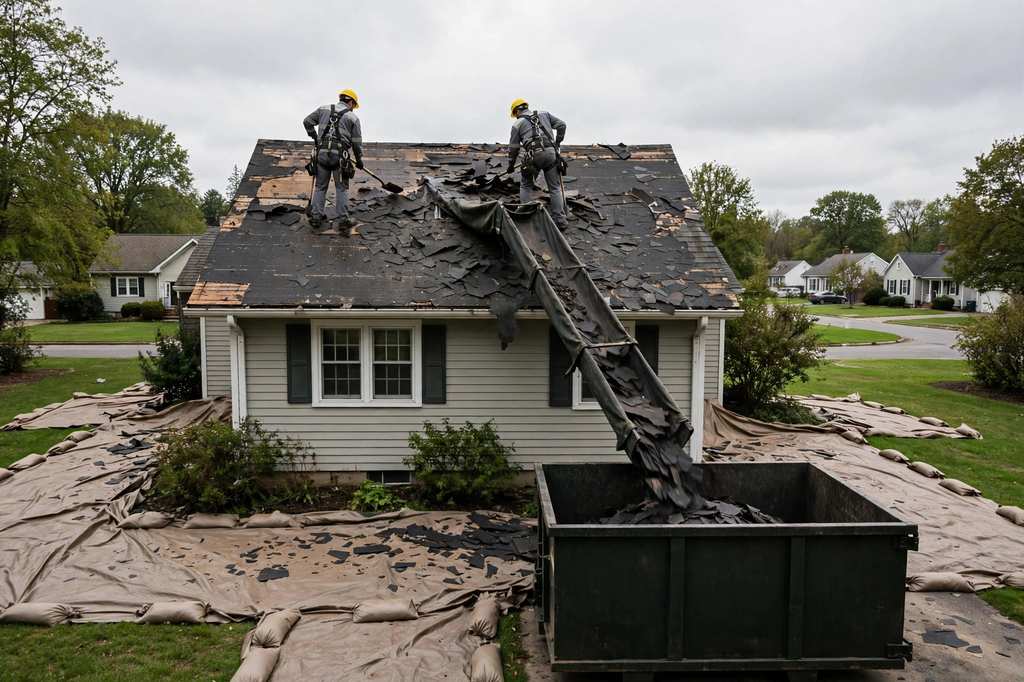
Tear-off and haul away
The old gutter, hangers, and fasteners are removed, bagged, and hauled. The fascia behind the old run is inspected for rot before anything new goes up.
Seamless on-site forming
Gutter coil is formed into continuous runs on the driveway, cut to the measured length. Fewer joints means fewer leak points and a run that follows the roofline exactly.
Hangers and fasteners
Hangers are set at regular spacing and fastened into rafter tails or solid fascia, with fasteners sized for the wood found, not a single screw that strips out in soft trim.
Outlets and downspouts
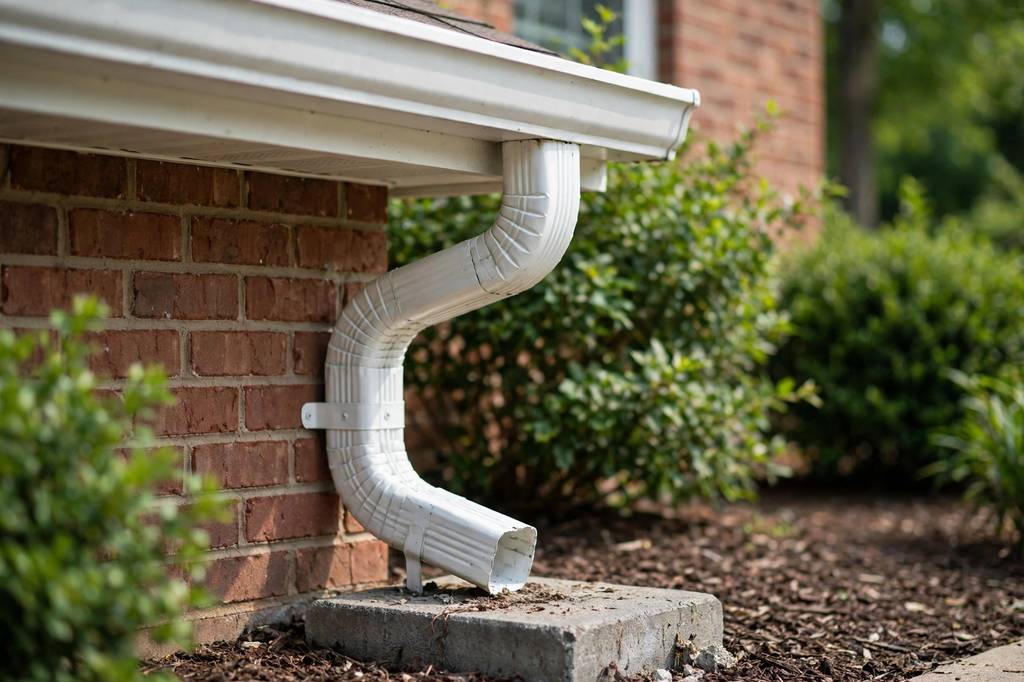
Outlets are cut and sealed at each downspout location, with downspouts sized and placed for grade. Extensions or splash blocks put discharge away from the foundation.
Corners and end caps
Corners and end caps are sealed with gutter sealant rated for freeze-thaw movement. These are the joints that fail first, so each one gets attention.
Water test and walk-through
Water runs through every run, downspout discharge is watched, and the property is walked. Pitch corrections happen before the machine is packed up.
Homes and businesses.
The approach is the same for a home and a business. What changes is the access, the schedule, and who needs the paperwork.
For Homeowners
A roof sheds a large volume of water in a hard rain, and the gutter system is what keeps it out of the foundation. Runs are sized and hung for the roof on the house, not the last owner's.
Overflow at the corners
Sagging runs and loose hangers
Water in the window well
For Property Managers
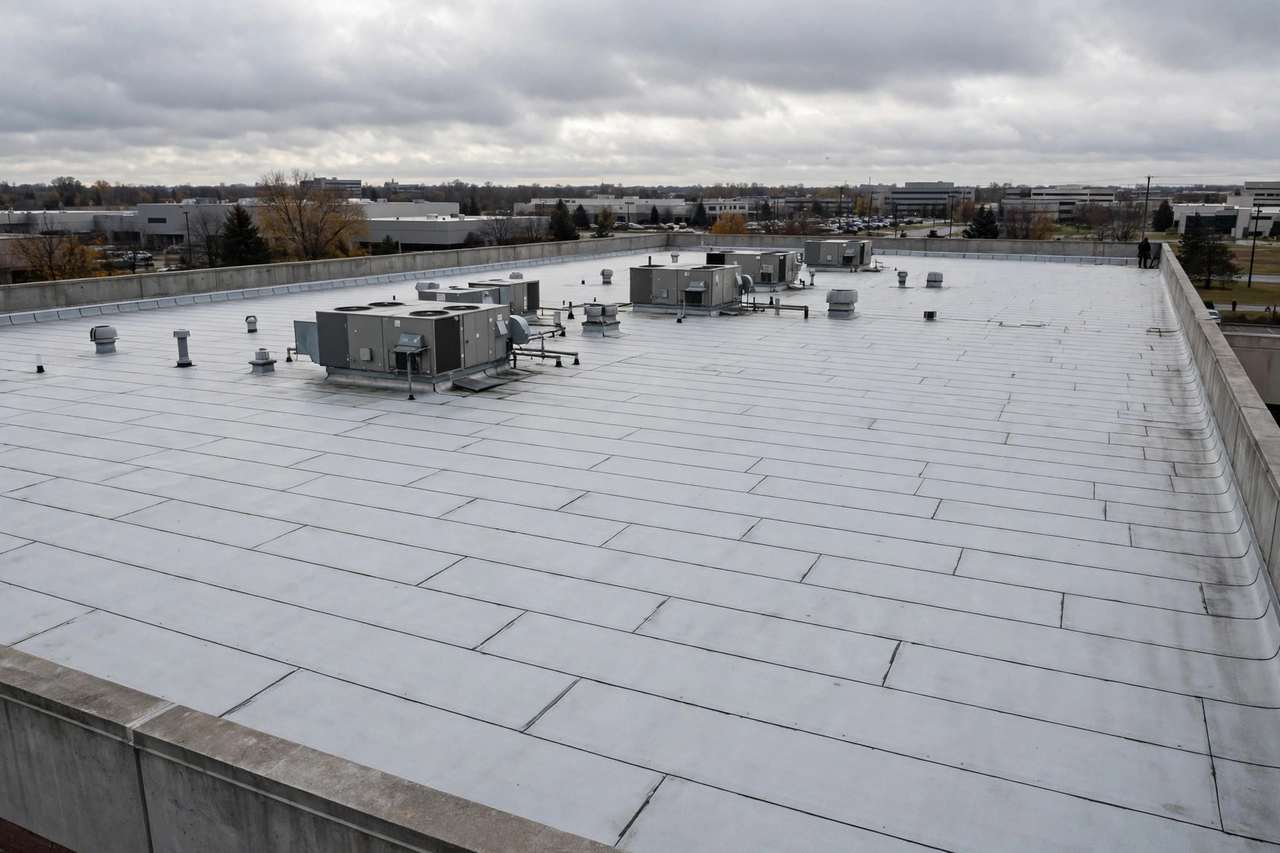
Commercial roofs move a lot of water through box gutters and downspouts, and undersized outlets show up as entryway flooding. Larger properties are described on the commercial roofing page.
Box gutter overflow
Undersized outlets
Entryway water intrusion
Gutter installation in Urbandale, done to the measure
A plain-language look at what gutter installation involves and when it is needed.
Gutter installation in Urbandale means the measured fabrication and fastening of seamless gutter runs, hangers, end caps, outlets, and downspouts so roof water leaves the house instead of soaking the soil beside it. Five-inch and 6-inch K-style and half-round profiles are formed from gutter coil on the driveway, which means fewer joints, fewer leaks, and a run cut to the exact roofline. Hangers go into rafter tails or fascia at spacing that holds under snow load, and every downspout gets a splash path away from the wall.
Many homes still carry original smaller gutters that cannot keep up with a modern roof plane. Freeze-thaw cycles and spring hail add to the load: undersized gutters spill over the fascia, damage the soffit, and send water into basement window wells. The winter preparation post covers gutters and downspouts before freeze-up, and the ceiling leak post explains how overflow at the eave can look like a roof leak.
Gutters work when they are sized to the roof, pitched to the outlet, and fastened into solid wood.
What it is
Seamless gutter runs formed on site, hung to pitch, with downspouts that move roof water away from the foundation.
When it is the scope
Overflow at corners, sagging runs, leaking seams, or fascia damage behind the old gutter line.
What to expect
A measure, a written scope, the install, and a water test before leaving.
How a gutter install runs
Five stages from the first call to the final walk-around.
On-site measure
The roofline is walked, every run is measured, downspout locations are counted, and the fascia is checked for soft spots. A written scope lists linear footage, profile size, hanger spacing, and downspout count before anything is ordered.
Measure
Inspect
Scope
Material and color
The profile and color are picked from coil samples, and 5-inch or 6-inch sizing is confirmed based on roof area and pitch. Guard or open-top is decided, and where downspouts tie into existing drainage is agreed.
Profile
Color
Sizing
Tear-off and prep
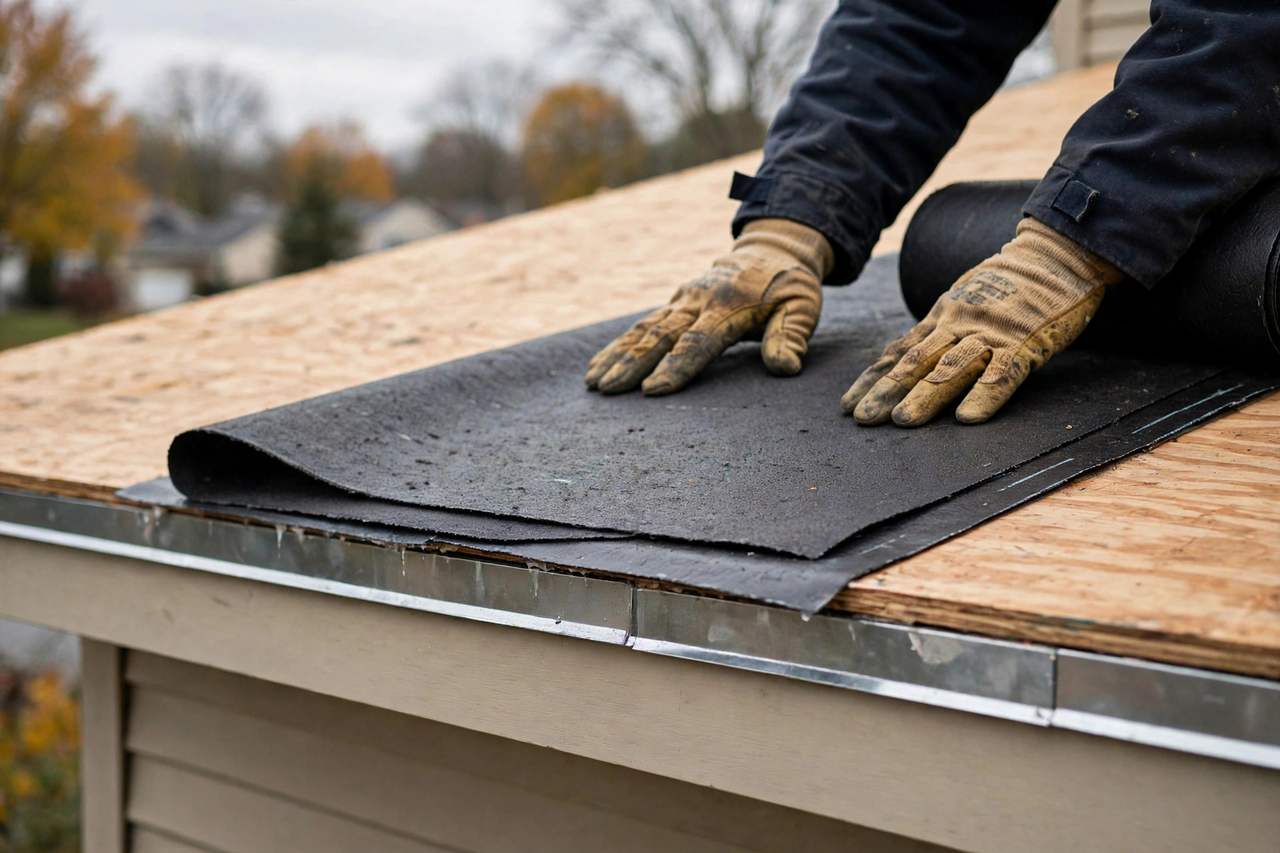
Old gutter and hangers come down, and the fascia board behind them is inspected. Damaged sections are replaced before new hangers go up. Beds and walkways underneath are covered, and magnets run over the grass at the end of the work.
Tear-off
Fascia
Prep
Forming and hanging
The gutter machine runs on site, forming each continuous length to the measured run. Pitch is set toward the outlet, hangers are fastened at regular spacing, and corners and end caps are sealed.
Form
Hang
Seal
Test and walk-through
Water runs through every run and downspout discharge is watched. Then the property is walked, splash paths are pointed out, and the scope paperwork is handed over. A downspout extension or splash block is set before leaving where one is needed.
Test
Walk-through
Handoff
Tools and methods used on gutter work
Move across a circle, or focus it and press Enter, for an illustrative thermal view of the photograph.
Seamless gutter machine
Forms gutter coil into continuous runs on site, cut to the measured length. This is what removes factory seams and lets the run follow the roofline exactly.
Gutter coil
Aluminum coil in standard colors, fed through the machine. Common trim colors are stocked, and specialty colors are ordered.
Chalk line
Marks the pitch line along the fascia so every run slopes consistently toward the outlet.
Roofing nail gun
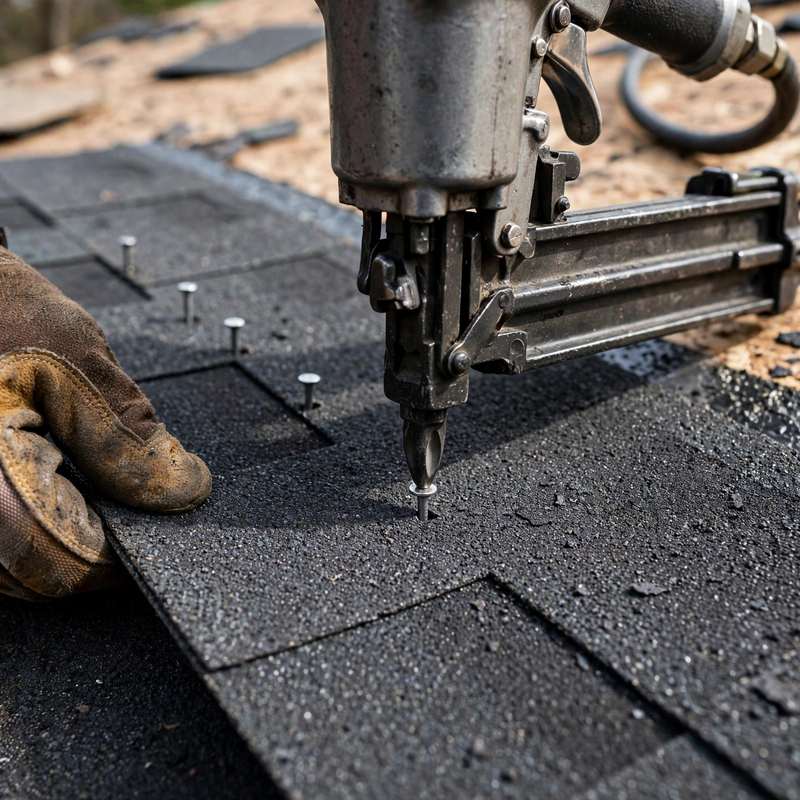
Drives hangers and fasteners consistently into rafter tails and fascia, with depth set so the wood is not overdriven.
Pry bar
Removes old gutter, hangers, and fasteners without tearing up the fascia board behind them during tear-off.
Thermal views are illustrative, generated from the photographs.
Methods
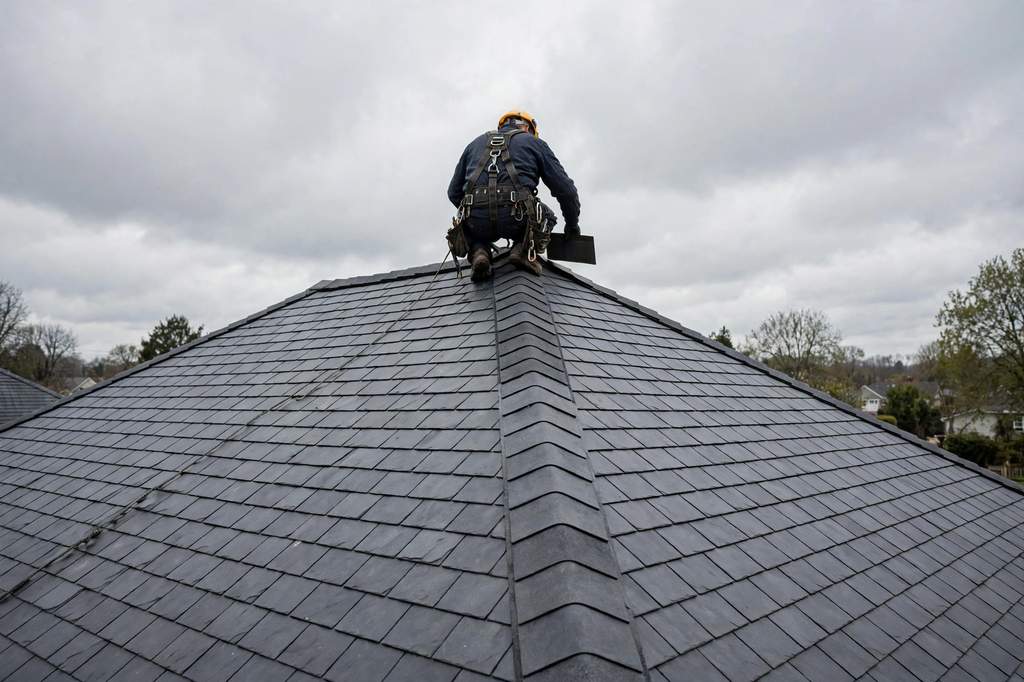
Roofing ladder and safety harness
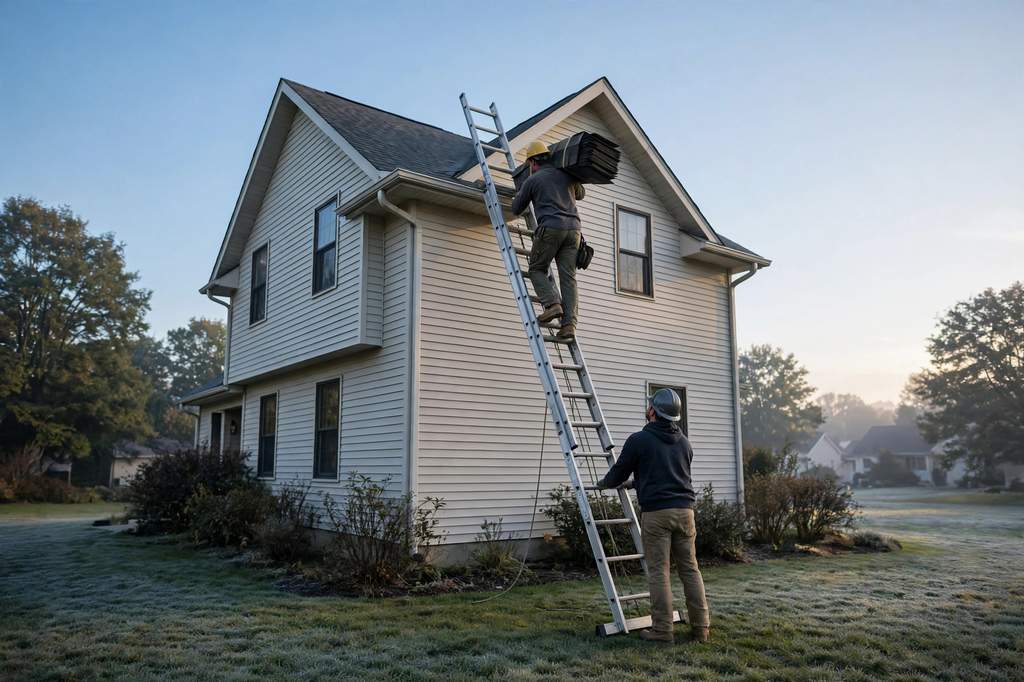
Ladder and harness setup for reaching the roof edge on two-story homes and steep pitches.
Moisture meter
Checks fascia and soffit boards for moisture content before new gutter is hung, so soft wood is caught before it becomes a repeat visit.
On-site seamless forming
Each run is formed on the driveway rather than hauled in sectional lengths. Joints are limited to corners and outlets, which cuts leak points and gives a continuous run that follows the roofline.
Pitch set toward the outlet
Every run is set to a consistent slope toward the outlet. Too little pitch and water stands; too much and the high end pulls away from the roof edge. The slope is marked with a chalk line and checked with water.
Hanger spacing
Hangers are fastened at regular spacing into rafter tails or solid fascia. Wide spacing is a common cause of sagging runs, especially under snow load.
Fascia inspection before hang
The fascia board is checked with a moisture meter and a probe before hanging new gutter. Damaged wood is replaced first so the hangers have something solid to hold.
Situations where gutter work is the call
Hail and roof
A homeowner is replacing a roof after hail damage and the old gutters are dented and undersized.
The roof replacement and gutter install are coordinated so the fascia is exposed once. New seamless runs are sized for the new roof plane and hung after the shingles are finished.
Outcome: One tear-off sequence, and a roof-and-gutter system sized together for the next storm.
Original smaller gutters
A ranch still has original smaller gutters that spill over in every hard rain.
The roof area is measured, 5-inch or 6-inch sizing is confirmed, soft fascia is replaced, and new seamless runs are formed with added downspouts at the low corners.
Outcome: The overflow is addressed, the fascia stays dry, and the basement window wells stop filling during spring storms.
Commercial box
A property manager needs box gutters and downspouts replaced on a small commercial building before winter.
The box gutter is scoped, outlets are sized for the roof area, and work is arranged around business hours so the entryway stays open.
Outcome: Water leaves the roof cleanly, the entryway stays dry, and the building is ready for freeze-thaw season.
Pre-sale inspection
A homeowner is selling and the inspection report flags sagging gutters and loose hangers.
The fascia is inspected, hangers are reset or replaced, and full replacement is scoped if the run is beyond repair. The written scope goes to the agent for the closing file.
Outcome: The inspection item is addressed, the roofline looks maintained, and the sale moves forward without a repair credit.
Clogged runs and guards
A homeowner wants guards because nearby maples clog the gutters every fall.
Runs and downspouts are cleared first, then guards are scoped as a combined job, with outlets sized for debris-heavy flow and the guard profile confirmed to fit the gutter. Guards reduce clearing frequency; the system is still checked.
Outcome: Fall leaf drop clogs the runs less, and the downspouts stay open through the season.
Karen AcresRolling GreenDowntown Urbandale
Gutter installation Urbandale: how an install runs
The local climate drives most of what gutter work addresses. Winters bring repeated freeze-thaw cycles that open seams and pull hangers, and spring storms drop hail that dents aluminum and cracks downspout joints.
Older homes often still have original smaller gutters sized for a smaller roof, while newer builds tend to have larger roof planes that need more capacity. Every system is sized to the roof area and pitch, not to what was there before. Fascia condition varies just as much as building age, and fascia repair and downspout extensions change a scope more than the gutter profile does.
Call and ask about a specific street. The written scope lists linear footage, profile, hangers, downspouts, and fascia work, so each part of the job is visible before anything is ordered.
Karen Acres: Older ranches with original smaller gutters and fascia that often needs replacement before new hangers go up.
Rolling Green: Mature trees drop heavy debris, so guards and larger outlets are common topics on a measure visit.
Downtown Urbandale: Downtown is the one official district in the city. Roof pitch and tree cover vary, so sizing is done per house.
Timber View Estates: Larger roof planes and longer runs shape the sizing conversation and the downspout count.
Hallbrook: For this area, the one verified HOA roofing fact in the research is that Hallbrook Phase III homeowners maintain their own exteriors. Phases I and II are unverified — check the association documents for the specific address.
Freeze-thaw cycles from December through March: ice expands in seams and outlets, opening joints and pulling hangers loose. Hanger spacing and sealant are set with that movement in mind.
IllustrativeThe thermal view is generated from the photograph. It is not a measurement. Drag the handle, or use the arrow keys once it is focused.
Ranch overflow fix
Before: A ranch had original smaller gutters that spilled over at both corners in every hard rain. The fascia behind the front run was soft, and the basement window well filled during spring storms.
After: Soft fascia is replaced, seamless gutter is formed to the measured runs, and a downspout goes at the low corner. A water test shows discharge at every downspout with no overflow.
Clear the runs each fall after leaf drop and check hanger tightness regularly. A splash block at the new downspout keeps discharge away from the foundation.
Two-story hail replacement
Before: Hail dented the gutter runs on a two-story home and cracked two downspout seams. The roof was also due for hail damage repair, and the original gutter was undersized for the rear roof plane.
After: The roof repair is completed and seamless gutter goes on with added downspouts. The dented runs and cracked seams are gone, and the rear plane stops overflowing in heavy rain.
Inspect the downspout seams each spring after freeze-thaw season. Guards on the rear run keep debris from nearby trees out of the larger outlets.
Box gutter rebuild
Before: A small commercial building had box gutters that overflowed into the entryway during storms. The outlets were undersized for the roof area, and the pitch had settled over time.
After: Box gutter runs are rebuilt, outlets are enlarged, and pitch is reset toward the downspouts. The entryway stays dry, and the building is ready for winter.
A fall clearing and a spring pitch check suit commercial box gutters, which collect debris fast. Clearing the outlets before freeze-up prevents ice backup.
Gutter problems this page addresses
Most gutter calls trace back to a handful of failures. The ones below are the most common, and how each is addressed.
Corner overflowGutters overflow at the corners during heavy rainWater sheets down the siding, soaks the fascia, and pools at the foundation. Over a season, that shows up as paint failure, soft trim, and a wet basement corner. The run is checked for pitch loss and undersizing. The fix is often a larger profile or an added downspout at the low corner. Water runs through the new system before leaving to confirm it clears.
Sagging runsGutters sag between hangers and pull away from the fasciaSagging creates low spots that hold water, and standing water accelerates rust and seam failure. Pulled hangers mean the fastener no longer bites into solid wood. The run comes off, the fascia is inspected, and damaged board is replaced. Then hangers are reset at regular spacing into solid wood.
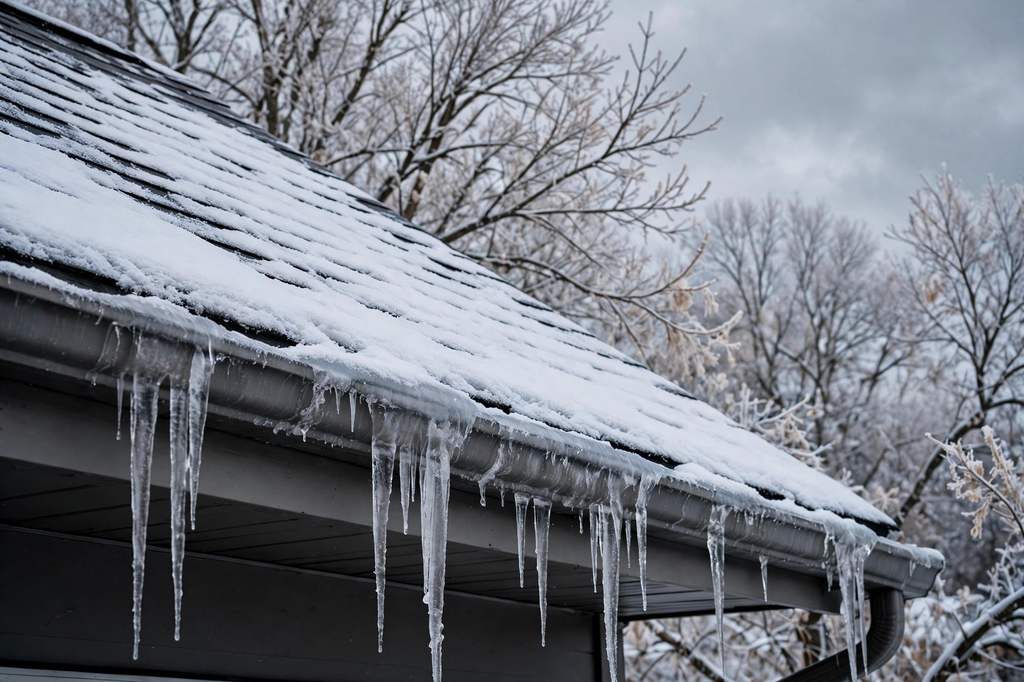
Ice damsIce dams form at the gutter line every winterIce backs water up under the shingles and into the attic. Repeated ice dams damage the roof deck and the fascia, and no gutter size fixes the underlying heat loss. Attic insulation and ventilation are checked alongside the gutter, and where heat loss is the cause, that is stated, with the insulation and vent work described that actually addresses it.
Downspout dischargeDownspouts discharge right at the foundationWater lands beside the wall and finds the basement. Downspouts are extended away from the wall, splash blocks are added, or existing drainage is tied into where grade allows. It is a small change with an outsized effect on foundation moisture.
Leaking seamsOld sectional gutters leak at every seamEach factory joint is a leak point, and freeze-thaw opens them wider every year. The sectional run is replaced with seamless gutter formed on site. Joints are limited to corners and outlets, which cuts the leak points and ends the annual reseal cycle.
Why new gutters pay off
Correct gutters keep roof water off the fascia and away from the foundation.
Foundation water control
A roof sheds a large volume of water in a hard rain. Correctly pitched gutters and extended downspouts move that water away from the foundation instead of dumping it at the wall, which is the difference between a dry basement and a wet one.
Fewer seams, fewer leaks
Seamless gutter installation keeps joints to the corners and outlets only. Every factory seam on a sectional run is a future leak point, and in a climate that swings widely between January and July, those seams open. One continuous run holds.
Fascia and soffit protection
Overflowing gutters back water up under the shingles and soak the fascia board behind them. Hangers are fastened into sound wood and damaged fascia is replaced before the new gutter goes up, so the run stays tight instead of pulling loose at the first hard freeze.
A straight roofline
New gutters in a matched color clean up the roofline. Sagging, dented, or mismatched gutters show on a walk-around. A straight, seamless run in a color that matches the trim reads as a maintained house.
Records that go with the job
Clear records to keep and share.
Scope sheet
Linear footage, profile, and hanger count
Photo log
Before and after shots of each run
Water test note
Confirmation every downspout discharges
Care sheet
Cleaning and inspection timing for the system
Sizing and profile choices that matter
The right gutter size depends on roof area, pitch, and how fast water reaches the edge. Profile is a looks-and-capacity decision.
5-inch K-style
Standard capacity for most single roof planes
Common on ranches
Fits most trim
Standard capacity
6-inch K-style
More capacity for large or steep roof planes
Handles heavy flow
Fewer downspouts needed
More capacity
Half-round
Traditional profile with smooth interior flow
Classic look
Good debris shedding
Traditional profile
Materials and parts described on this site
Gutter coil
Downspouts
Hangers
End caps
Outlets
Leaf guard
Splash blocks
Sealant
ZIP codes do not set the city line.
A mailing address can carry a neighboring city's name, and an Urbandale address can carry a neighboring ZIP code. A parcel record settles which city governs an address. Call and ask about a specific street.
This business publishes no prices on this site. A written scope lists the linear footage, the profile, the hanger count, the downspouts, and any fascia work, so each part of the job is visible before anything is ordered.
Sizing is set during the measure, by roof area and pitch. A larger roof plane, a steeper pitch, and a longer run call for more capacity, which is why 6-inch profile is considered alongside the standard 5-inch. No capacity percentage is published on this site.
Seamless runs remove the factory joints where sectional gutters leak, and in a climate with hard freezes those joints are the first thing to fail. A continuous run follows the roofline, with joints limited to corners and outlets. Whether seamless suits a given house is decided at the measure.
Guards are one option for debris-heavy runs, described in the guards section of this page. Clearing runs and downspouts is part of gutter work on this site: clogged runs back water up under the shingles and into the fascia. Guards reduce clearing frequency; they do not remove the need to check the system.
Call (641) 219-5108 to talk about a roofing question. The office is at 3815 109th St, Urbandale, IA 50322, United States, and the listed hours are Open 24 hours, every day.